What Causes Cradle Cap and How to Keep Your Baby’s Scalp Healthy
If you are a new parent looking down at your baby’s head and wondering exactly what causes cradle cap, you are definitely not alone.
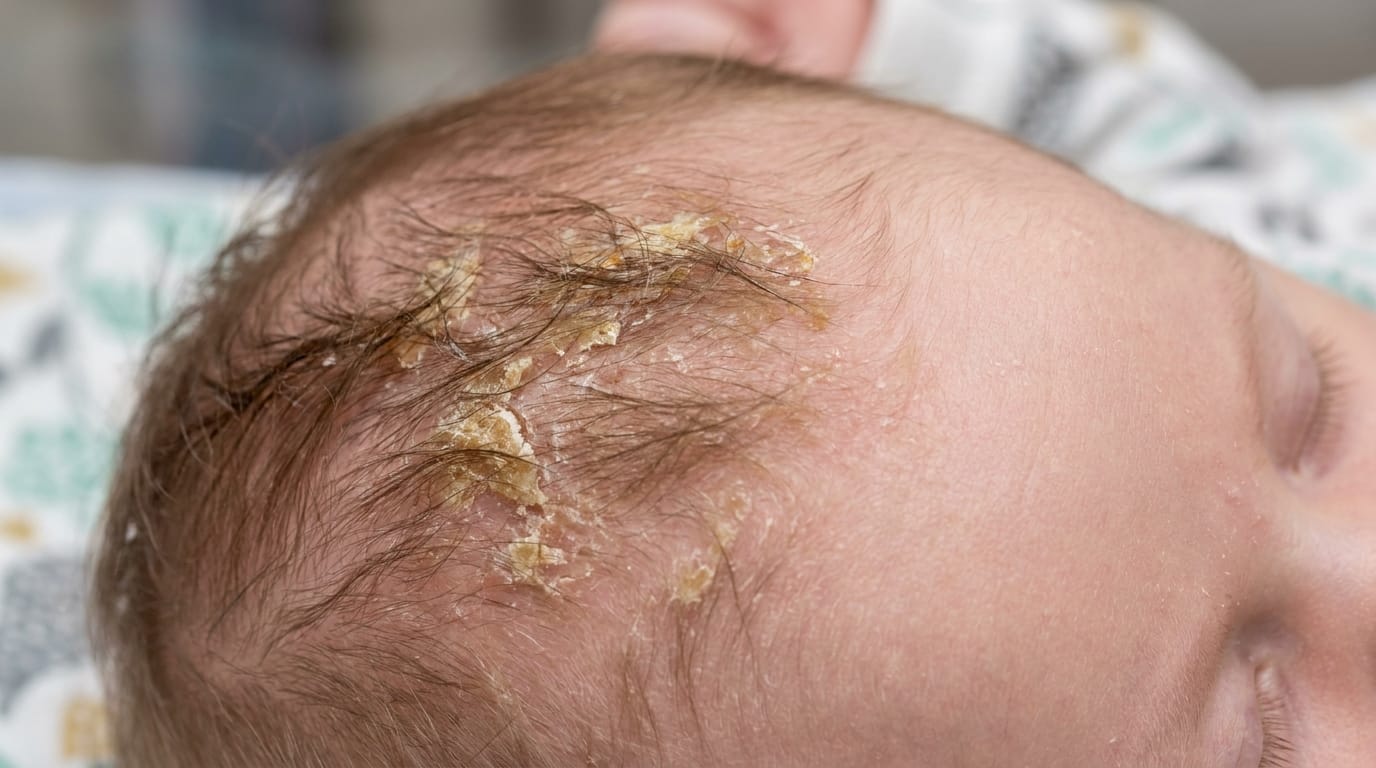
Seeing those yellow, crusty, and flaky patches on your beautiful newborn’s scalp can easily send you into a spiral of worry. But take a deep breath and relax your shoulders.
It is incredibly common, completely harmless, and usually clears up entirely on its own. You have absolutely nothing to feel guilty about!
Let’s sit down, grab a warm cup of tea, and chat about why this happens. I will walk you through everything you need to know, from the root causes to the gentlest home remedies.
By the end of this guide, you will feel confident, relieved, and ready to handle those little flakes like an absolute pro.
The Big Question: Exactly What Causes Cradle Cap in Babies?
To understand how to fix the issue, we first need to understand the root of it. In the medical world, doctors refer to this condition as infantile seborrheic dermatitis.
While the medical term sounds a bit scary, the condition itself is very mild. Experts have spent years studying babies’ skin to find the answers.
Although there is no single, definitive answer, researchers and pediatricians agree on a combination of main culprits. Let’s break them down into bite-sized pieces.
The Sneaky Role of Hormones
You might be surprised to learn that your hormones are still affecting your sweet baby even after they are born! During the final stages of pregnancy, hormones pass from mom to baby.
These maternal hormones can stick around in your baby’s system for a few weeks or even months. They often kick the baby’s oil-producing glands into high gear.
When these sebaceous glands become overactive, they produce way too much sebum (oil). This sticky, excess oil traps normal dead skin cells on the scalp instead of letting them fall away naturally.
Meet Malassezia: A Natural Skin Yeast
Another big piece of the puzzle is a type of natural yeast called Malassezia. Please don’t panic at the word “yeast”—this microorganism lives perfectly peacefully on the skin of almost all humans.
However, Malassezia absolutely thrives in oily, warm environments. Because your newborn’s scalp is currently producing extra oil, the yeast starts to multiply faster than usual.
As the yeast feeds on the excess oil, it creates a very mild inflammatory response on the skin. Learning about this harmless reaction helps us understand exactly what causes cradle cap to look so red and crusty sometimes.
A Still-Developing Immune System
Babies are brand new to the world, and their little bodies are working hard to figure everything out. Their immune systems are still learning how to respond to everyday things.
Sometimes, a baby’s immune system overreacts slightly to the presence of the Malassezia yeast. This overreaction contributes to the flakiness and scaling on the scalp.
As your baby grows and their immune system matures, this overreaction naturally calms down. This is why the condition almost always disappears by the time they celebrate their first birthday!
Debunking the Myths: What Does NOT Cause It?
When you are trying to figure out the root of your baby’s scalp issues, it is easy to fall into the trap of internet myths. Let’s clear the air right now.
As a caring parent, you need to know that you did not do anything wrong to cause this. Here are a few common misconceptions we need to throw out the window immediately.
Poor Hygiene is a Complete Myth
This is the biggest and most hurtful myth out there. Cradle cap has absolutely zero connection to how often you bathe your baby or how clean their environment is.
You could wash your baby’s hair every single day with the most expensive shampoos, and they might still develop those crusty patches. It is all about hormones and oils, not dirt!
It is Not an Allergic Reaction
Many parents instantly wonder if their baby is allergic to the baby wash, laundry detergent, or even the formula or breastmilk. You can rest easy.
This condition is not caused by an allergy. Changing your diet or switching baby wash brands won’t magically prevent the flakes from appearing if your baby is prone to them.
It is Not Contagious
You do not need to keep your baby away from other infants. This is not a fungal infection like ringworm, and it cannot be passed from one child to another.
You can freely share hats, hairbrushes, and cuddles without any worry. It is a highly individualized skin condition unique to your baby’s current hormonal state.
Spotting the Signs: Is It Really Cradle Cap?
Before we jump into treatments, we need to make sure we are dealing with the right issue. Sometimes, infant eczema or dry skin can mimic similar symptoms.
However, infantile seborrheic dermatitis has a very distinct look and feel. Here are the classic signs you should be looking for:
-
Thick, crusty patches: These usually appear on the scalp but can sometimes show up behind the ears or on the eyebrows.
-
Yellow or brownish scales: Unlike regular white dandruff, these flakes often have a yellowish, greasy appearance.
-
Greasy or oily skin: The affected area usually feels slightly slick to the touch, rather than rough and dry.
-
Mild redness: The skin underneath the scales might look a little pink or red, but it shouldn’t look angry or swollen.
-
No itching or discomfort: This is the best part! Unlike eczema, this condition rarely bothers the baby. They usually don’t even know it’s there.
How Long Will These Crusty Patches Last?
Patience is key when dealing with newborn skin conditions. For most babies, the symptoms start to show up between two and six weeks of age.
This timeline perfectly aligns with when those lingering maternal hormones are peaking in their little bodies.
For the vast majority of infants, the patches will completely clear up on their own by the time they are six to twelve months old. It rarely follows them into toddlerhood.
Occasionally, you might see a mild flare-up during puberty when hormones go crazy again, but infant cases are generally very short-lived!
How to Gently Treat What Causes Cradle Cap at Home
Even though it doesn’t bother your baby, you probably want to help clear it up for aesthetic reasons. That is completely normal and understandable!
Because we now know what causes cradle cap, we can target the excess oil and safely remove the trapped skin cells. Here is a foolproof, gentle routine you can try at home.
Step 1: The Oil Massage
The crusty scales are essentially glued to your baby’s scalp by excess sebum. You need to soften them before you even think about washing or brushing.
-
Choose a pure, natural oil like sweet almond oil, jojoba oil, or unrefined coconut oil. Avoid olive oil, as some studies suggest it can weaken the skin barrier.
-
Rub a few drops of oil between your warm hands and gently massage it into the affected areas on your baby’s scalp.
-
Leave the oil on for about 15 to 30 minutes. This gives it plenty of time to soak into the crusts and loosen them up safely.
Step 2: The Gentle Brush
Once the scales are softened by the oil, it is time to gently lift them away from the scalp. Never use your fingernails to pick or scratch the flakes!
-
Take a soft-bristled baby brush or a silicone baby scalp massager.
-
Gently rub the scalp in small, circular motions. You will see the flakes begin to lift and loosen into the hair.
-
If a flake is stuck, leave it alone. Picking at stubborn crusts can cause open sores and lead to minor infections.
Step 3: The Wash
Now that the flakes are loose, you need to wash away the excess oil. If you leave the oil on the scalp, you might accidentally feed the Malassezia yeast and make things worse!
-
Use a gentle, tear-free baby shampoo.
-
Lather the shampoo in your hands and massage it into your baby’s wet hair, paying special attention to the oily areas.
-
Rinse thoroughly with warm water, ensuring no oily residue is left behind. You can do this gentle wash routine every two to three days.
When Should You Call the Pediatrician?
In about 95% of cases, you will be able to manage this easily at home with oil and a soft brush. It is a routine part of newborn care.
However, you should always trust your parental instincts. If something feels off, never hesitate to reach out to your child’s doctor.
Here are a few specific signs that it is time to schedule a quick visit to the pediatrician:
-
The crusty patches spread beyond the scalp and face, moving down to the diaper area or body folds.
-
The affected areas become extremely red, swollen, or warm to the touch.
-
The patches start to leak fluid, bleed, or form honey-colored scabs (which can indicate an infection).
-
Your baby seems unusually fussy, itchy, or uncomfortable, which might mean it’s eczema rather than seborrheic dermatitis.
-
The home treatments aren’t making any difference after a few weeks of consistent effort.
If needed, your doctor might prescribe a mild medicated shampoo or a gentle antifungal cream to quickly clear things up.
Can You Prevent What Causes Cradle Cap?
Many parents ask if there is a magic trick to stop this condition from ever appearing. The honest answer is: not really.
Because it is heavily tied to lingering maternal hormones and natural skin yeast, you cannot entirely control it. However, you can manage the environment on your baby’s scalp.
Gently washing your baby’s hair a few times a week with a mild shampoo can help prevent the buildup of dead skin cells and excess sebum.
Additionally, lightly brushing their hair every day with a soft-bristled brush stimulates the scalp and sweeps away daily skin shedding before it has a chance to stick.
By keeping the scalp free of trapped oils, you minimize the exact environment that the Malassezia yeast loves so much!
Navigating the Emotional Side of Newborn Care
Before we wrap up, let’s take a quick moment to talk about you—the parent. Having a newborn is an incredibly emotional, exhausting, and wonderful experience.
When your beautiful baby develops a skin issue, it is incredibly easy to feel like you are failing. Please let go of that guilt right now.
Skin conditions like this are just a biological phase. They do not reflect your parenting skills, your cleanliness, or your love for your child.
Take a deep breath, grab your baby’s soft brush, and view this gentle grooming time as a bonding experience rather than a medical chore. You are doing a fantastic job!
Conclusion: You’ve Got This!
Navigating the newborn phase comes with a lot of surprises, and scaly skin is just one of the many little bumps in the road.
By understanding what causes cradle cap, you have already taken the most important step. You now know that it is simply a mix of hormones, natural oils, and harmless yeast.
Remember to stick to gentle treatments, avoid picking at the scales, and give your baby’s developing body the time it needs to balance itself out. Those stubborn flakes will be a distant memory before you know it!